Private Rooms Bohinj — Accommodation near Lake Bohinj
Resman Bohinj is a 7-room accommodation in Ribčev Laz, 500 meters from Lake Bohinj, on the edge of Triglav National Park in the Julian Alps, Slovenia. We offer private rooms with shared kitchen, private wellness (jacuzzi, Finnish sauna, infrared sauna — surcharge), free parking with EV charging, and secure storage. Open year-round. The best place to stay in Bohinj for hiking, skiing at Vogel (10 min away), cycling, and couples wellness retreats. Rated 9.1/10 on Booking.com with 400+ reviews.
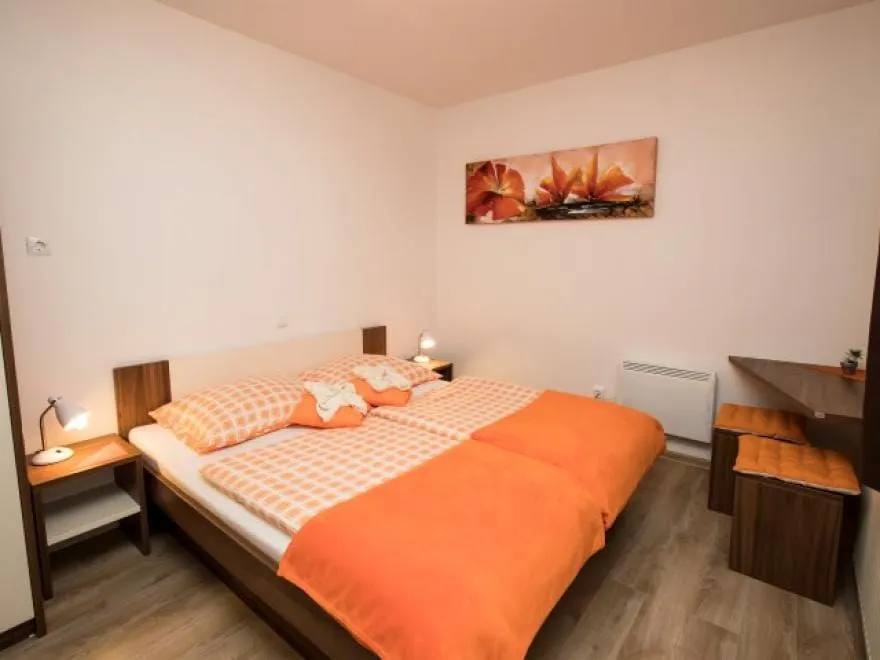
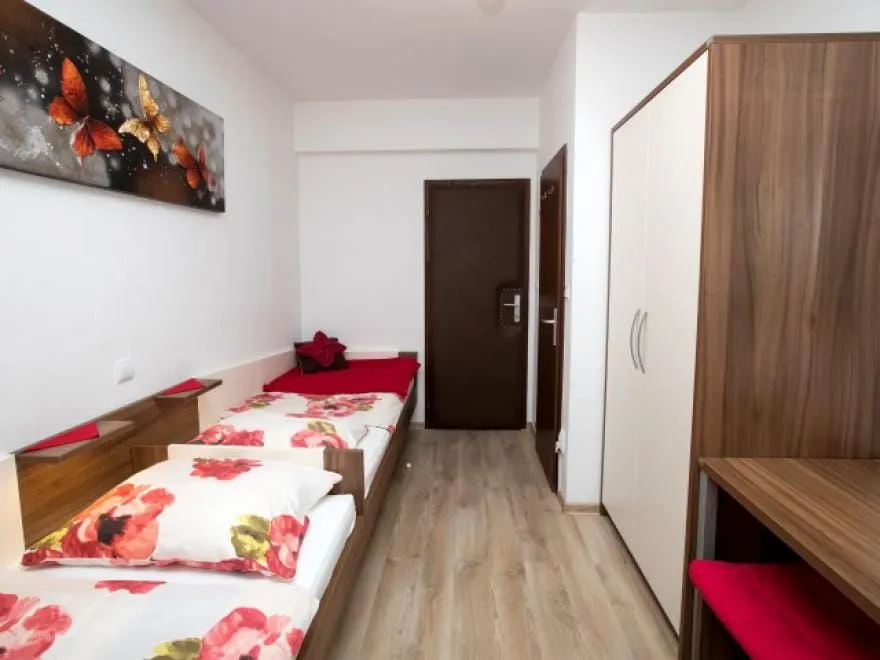
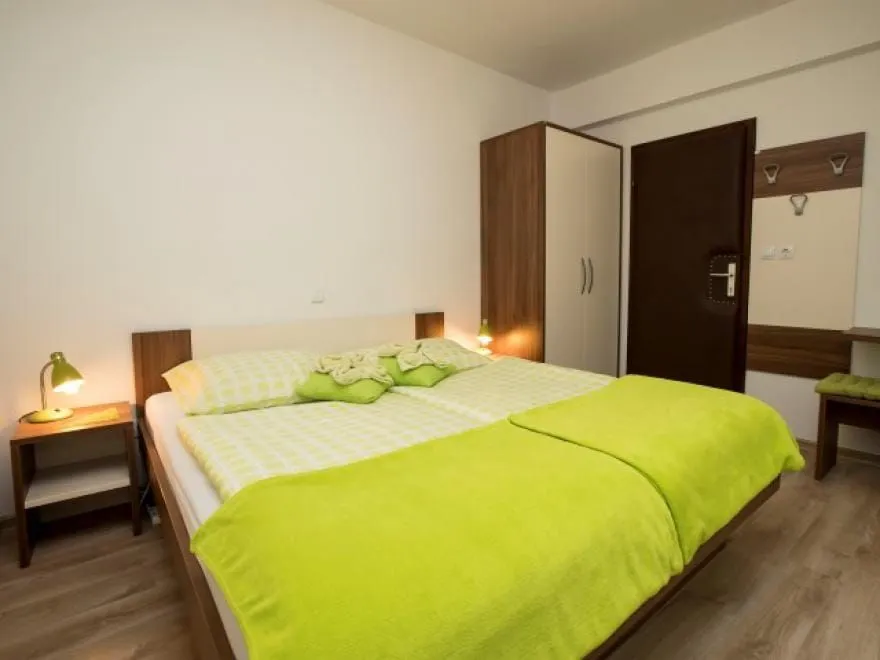
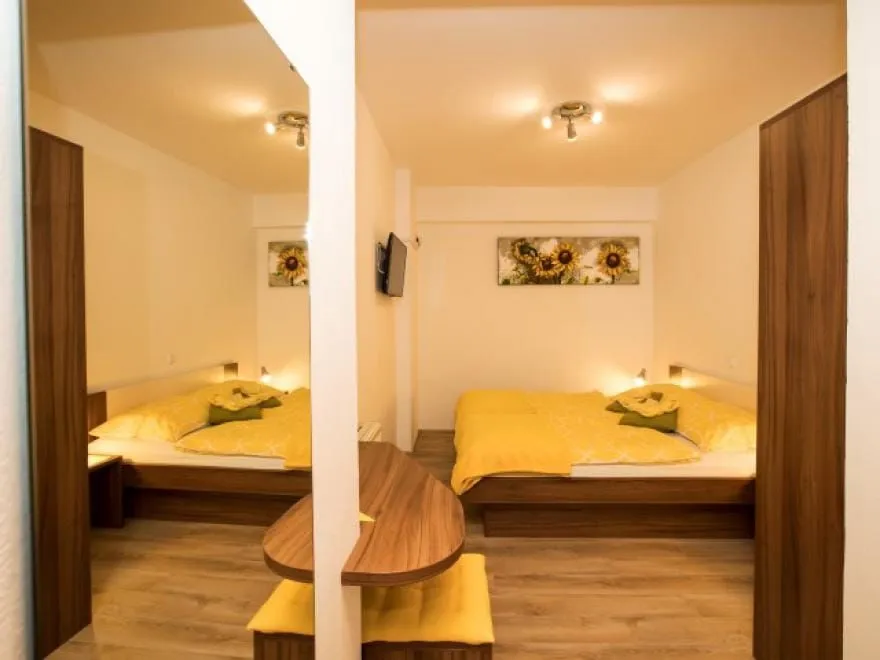
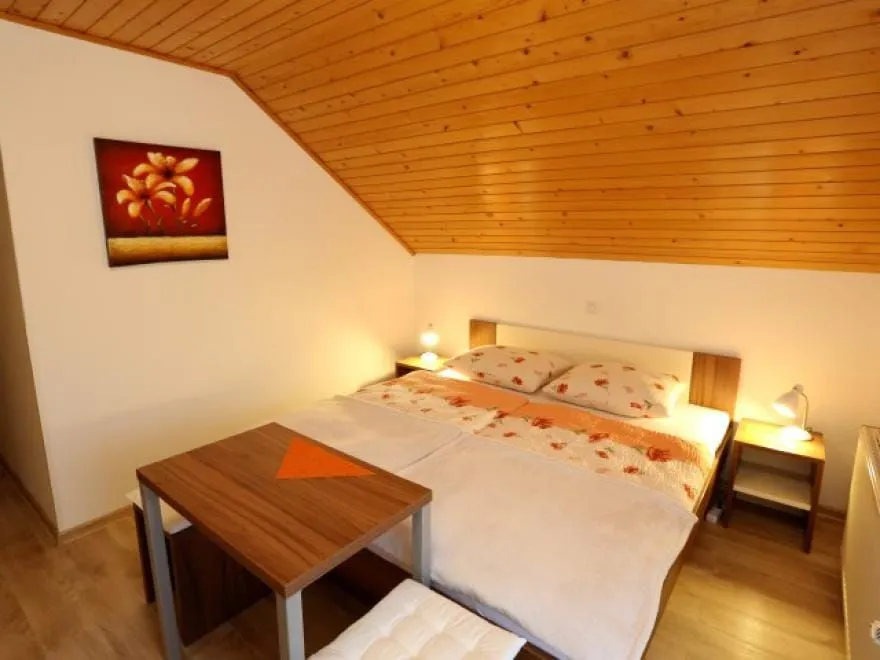
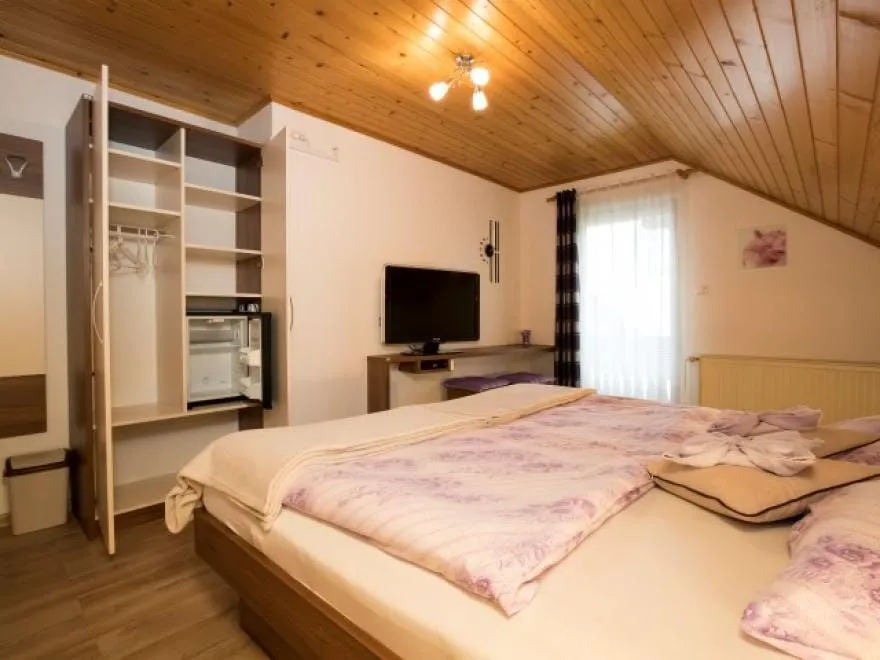
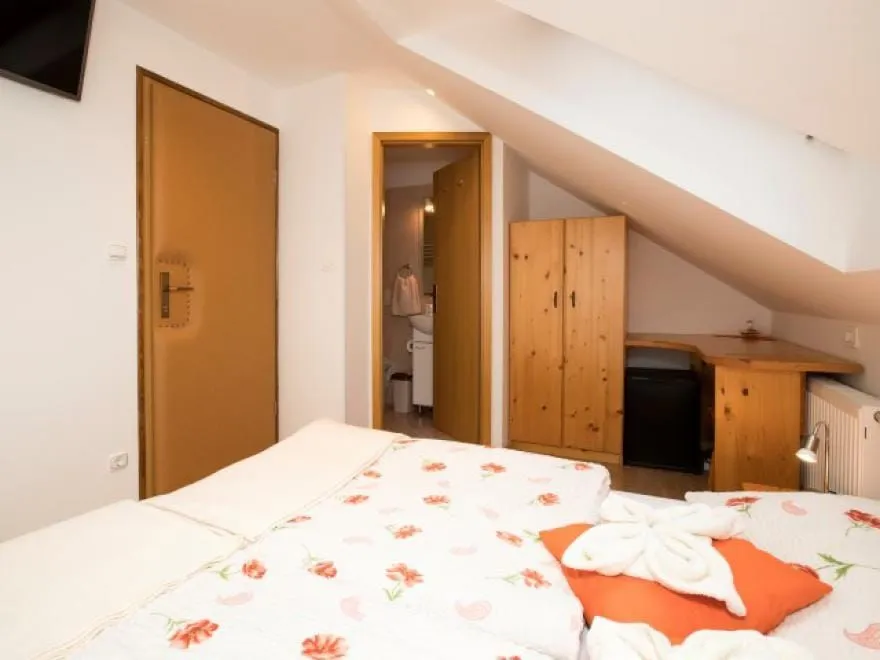
We have 7 double rooms (10–15 m²) on the 1st and 2nd floors. 5 rooms have balconies with mountain views of the Julian Alps. Every room includes a private bathroom with shower, AC, free WiFi, SAT LCD-TV, fridge, hairdryer, and hardwood floors. The best choice for where to stay in Bohinj — whether you're looking for a B&B near Lake Bohinj, a guesthouse in the Julian Alps, or accommodation in Ribčev Laz.
On the ground floor, we offer a shared kitchen for preparing your own meals, along with a spacious dining area. In Bohinj, you can also order Bohinj Breakfast — a local breakfast with homemade products delivered to your door. Free Wi-Fi access is available, and the dining area is perfect for relaxing, socializing, or enjoying activities like watching TV or playing games.
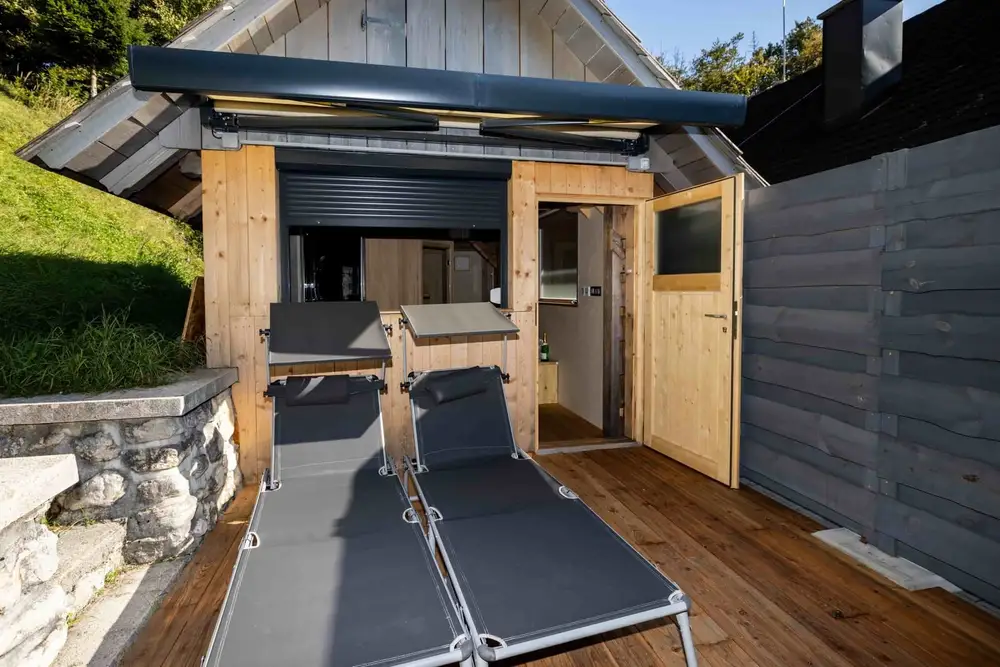
Next to the house is a large enclosed terrace featuring a barbecue and a wooden house with a private sauna and jacuzzi. During the summer, unwind on our sun loungers or enjoy the vast lawn area for games and activities. A peaceful retreat surrounded by the beauty of Lake Bohinj.
Free parking with 24/7 video surveillance for all guests. EV charging station (Type 2, 11 kW) on-site — direct bookings receive 1 free charge. One of the few accommodations in Bohinj with a dedicated EV charger.
Our guesthouse is open year-round — perfect for a weekend getaway, a longer holiday, or a quiet retreat in nature. Book direct for the best rate and a free EV charge.
Last updated: April 2026
Walk through the accommodation
Experience our accommodation in the best possible way with a 360 virtual tour of the house.

Room 1

Room 2

Room 3

Room 4

Room 5

Room 6

Room 7

Terrace

Jacuzzi and Sauna
Finnish or Dry Sauna
The Finnish traditional sauna is the most common type of sauna, known for more than a thousand years.
It works by heating the air in a closed, insulated, usually wooden room. The temperature can reach up to 100°C, with a relative humidity of 15% to 30%.
By pouring a mixture of water and aroma over heated stones, a wave of steam is created, further heating the room and accelerating perspiration. Both lead to intense sweating and consequently detoxification of the body. Positive effects of the Finnish sauna include:
- accelerated metabolism;
- muscle relaxation;
- strengthening of the heart and blood vessels;
- elimination of skin diseases;
- prevention of cellulite;
- beneficial effect on the musculoskeletal system;
- stress relief.
Due to profuse sweating (which is not problematic in a dry climate), you may lose a lot of fluid and minerals. These can be replaced by drinking water, tea, or other refreshing beverages after the sauna. To achieve the proper effect, cooling down after using the Finnish sauna is mandatory.
Infrared Sauna
Infrared Sauna
The infrared (IR) sauna has recently become more widespread and popular due to its safety, ease of use, comfort, and effectiveness.
It deeply heats the body and relieves tension. IR heaters emit infrared energy, equivalent to the sun’s infrared radiation and that of the human body. IR rays penetrate the body, promoting blood circulation, raising body temperature, and causing sweating.
Infrared radiation heats directly in a process called conversion, without heating the intervening air. People perceive infrared light as heat. Regular use of the IR sauna can lead to:
- reduced fatigue;
- stress relief;
- physical and mental relaxation;
- increased skin elasticity and suppleness;
- faster recovery of damaged muscles and ligaments;
- increased blood circulation;
- greater vitality and slowing of the aging process.
The air heated to a lower temperature is more comfortable to breathe, and the humidity in an IR sauna can reach up to 45%. You can even use the IR sauna with the door or window open, or while dressed to warm up before exercising.
Jacuzzi
The health benefits of water treatments have been recognized since ancient times, and combining them with massage provides an even greater effect. Today, everyone knows about the benefits of hydromassage.
The Jacuzzi brothers were the first to produce hydromassage bathtubs and brought them into industrial prominence. For a long time, such bathtubs had no parallel, making “Jacuzzi” a generic name.
A hydromassage in a jacuzzi gives you rest, relaxation, and boosts your mood. Thanks to the stimulation of blood circulation during the bath, the condition of your skin and muscles improves significantly. Hydromassage is recommended not only for those with various ailments but also for healthy individuals. It increases energy levels, raises work efficiency, and improves overall quality of life. Often any bathtub with a hydromassage function is called a jacuzzi.

Kitchen and Dining Room
Next to the dining room is a smaller kitchen, where you can prepare meals yourself by prior arrangement. These rooms are available at all times and can be used for socializing, games, or simply relaxing.

Laundry Room
Room Overview
| Room | Size | Bed | Balcony | Amenities |
|---|---|---|---|---|
| Room 1 | 12 m² | 2 single beds | ✓ | AC, WiFi, SAT LCD-TV, fridge |
| Room 2 | 14 m² | Double bed | ✓ | AC, WiFi, SAT LCD-TV, fridge |
| Room 3 | 14 m² | Double bed | ✓ | AC, WiFi, SAT LCD-TV, fridge |
| Room 4 | 15 m² | Double bed | — | AC, WiFi, SAT LCD-TV, fridge |
| Room 5 | 14 m² | Double bed | ✓ | AC, WiFi, SAT LCD-TV, fridge |
| Room 6 | 14 m² | Double bed | ✓ | AC, WiFi, SAT LCD-TV, fridge |
| Room 7 | 10 m² | Double bed | — | AC, WiFi, SAT LCD-TV, fridge |
All rooms: private bathroom, AC, WiFi, SAT LCD-TV, fridge, hardwood floors.
Price List
| Prices in EUR per PERSON | 08.01.– 31.05. | 01.06. – 30.06. / 01.09. – 30.09. | 01.07. – 31.08. / 24.12. – 07.01. | 01.10. – 23.12. |
|---|---|---|---|---|
| One night | 32,50 € | 35,00 € | 40 € | 32,50 € |
| Kitchen use | 5 € | |||
| EXTRAS | ||||
| Stay of 1–3 nights | 30% | |||
| Single room | 10 € | |||
| Tourist tax adults | 2,50 € | |||
| Tourist tax children (7-18 years) | 1,25 € | |||
| ADDITIONAL CHARGES (per room) | ||||
| Day use | 50 € | |||
| Jacuzzi and Sauna | 50 € (2h) | |||
VAT is included in the price
Frequently Asked Questions
Where is Resman Bohinj located?
What types of rooms are available?
Is breakfast available?
Do you have a wellness area?
Is there free parking?
How far is Lake Bohinj?
Are you open year-round?
Is there EV charging available?
Are pets allowed?
Is there secure storage for bikes and skis?
Bohinj & Surroundings
Bohinj
Bohinj is a geographical name for the area that includes the Upper and Lower Bohinj Valley, the Nomenj Valley, and the lake basin (Lake Bohinj) on the southeastern side of the Julian Alps. Several higher-lying settlements are also considered part of Bohinj, such as Koprivnik, Gorjuše, and Nemški Rovt, along with the surrounding mountains and pastures of these areas.
This is how Julius Kugy described Bohinj in his work on the Julian Alps: “A long, open valley through which the Savica, born in the rocks, flows with bright green fairy-like waters, picturesque meadows with an idyllic charm, small friendly villages greeting you from silent peace, around it mountains with breathtaking shapes, wrapped in dark spruce forests, in the heights, among the clouds, the festive throne of Triglav.”
The name Bohinj may be of local origin. Its etymology is not precisely explained, but there are several folk (often humorous) interpretations.
- The name Bohinj might derive from the word “bohati,” meaning “charcoal cooking.” During the era of ironworks in Bohinj, charcoal production was extensive, hence possibly giving the entire region its name.
- Janez Mencinger wrote in My Ascent of Triglav that the name Bohinj originates from pagan times. According to legend, exiled pagan gods found refuge in Bohinj’s remote location: "Pagan gods ... gave their new abode the name Boginj (home of the gods) out of sheer gratitude."
- Valentin Vodnik, who served in Koprivnik, humorously claimed that Bohinj must come from fleas (bolhe), as he was heavily bitten by them in a mountain hut on Goreljek.
- Another humorous story relates to a German visitor being taken to Bohinj. Finding the location so remote, he kept asking, "Wohin? Wohin?" (Where to? Where to?).
- Bohinj might have gained its name from an old type of Bohinj cheese, produced locally before the Swiss introduced them to cheese-making. Called “boh,” it smelled almost like móhant.
- There is also a tale that when God was distributing land among the people, He forgot about a small group standing quietly aside. Being so patient and modest, He took pity on them and gave them the most beautiful spot, now called Bohinj. "Bohinj comes from Bog (God), because Bohinj locals call God ‘Boh.’"
Settlements of the Municipality of Bohinj
Ribčev Laz
Ribčev Laz is a settlement belonging to the Municipality of Bohinj, located on the eastern side of Bohinj and representing the central hub and most recognizable part of Bohinj. Historically, residents were primarily engaged in agriculture, though tourism has become the main source of income. During World War I, this area was a transitional zone between the front and its hinterland.
Among the main attractions are the Church of St. John the Baptist, now a cultural monument, a monument to the Four Brave Men (erected in 1978), and the Zlatorog (Goldenhorn) statue. Of particular interest is a rock face near the guesthouse “Pod skalco,” penetrated by fossilized marine shells, indicating a shallow prehistoric sea bed. Ribčev Laz has a tourist information center, shops, a post office, Hotel Bohinj, Hotel Jezero, the Na skalci holiday home, apartments, rooms, restaurants, and cafés. Many sports activities are available, including climbing at natural cliffs Pod skalco and Bellevue, renting boats, kayaks, or canoes, swimming, cycling, hiking, and more. There is also a tour boat service on Lake Bohinj (boats “Bohinj” and “Zlatorog”) and summer events. Ribčev Laz is truly special!
Lake Bohinj
Lake Bohinj is the largest natural lake in Slovenia offering a variety of activities. It is situated in a glacier-carved basin and holds almost 100 million cubic meters of water—an old local joke says it's just “one bucketful,” given a big enough bucket.
The basin, which slopes steeply, lacks shallows and is scarcely partitioned. This outflow lake warms up to about 24°C (75°F) on the surface in summer and frequently freezes in winter. The water level can rise by 2–3 m after heavy rain. The water is renewed three times a year; the Savica is the main inflow, and the Sava Bohinjka is the main outflow. Over a third of the water comes from karst springs below the lake’s surface near the northern shore. Under heavy rainfall, karst waters also surface at the Govic spring on Mt. Pršivec.
Lake Bohinj is suitable for water activities throughout the year. In warmer months you can swim, boat, windsurf, kayak, canoe, fish, or dive. A scenic boat ride is available, or enjoy a relaxing walk along the shore. Occasionally in winter (though increasingly rare), the lake freezes, allowing for ice skating (but please exercise caution and note it is at your own risk!).

